Offset vs digital printing in Dubai: When does bulk actually save money?
The short answer to offset vs digital printing in Dubai: digital wins on short runs, fast turnaround, and personalized content, while offset wins once the quantity is high enough for its setup cost to be spread across thousands of sheets. The crossover depends on the product, paper and number of colors, but the principle is fixed and helps you decide before you ask for a quote on anybusiness printing job.
How does each method work?
Offset lithography
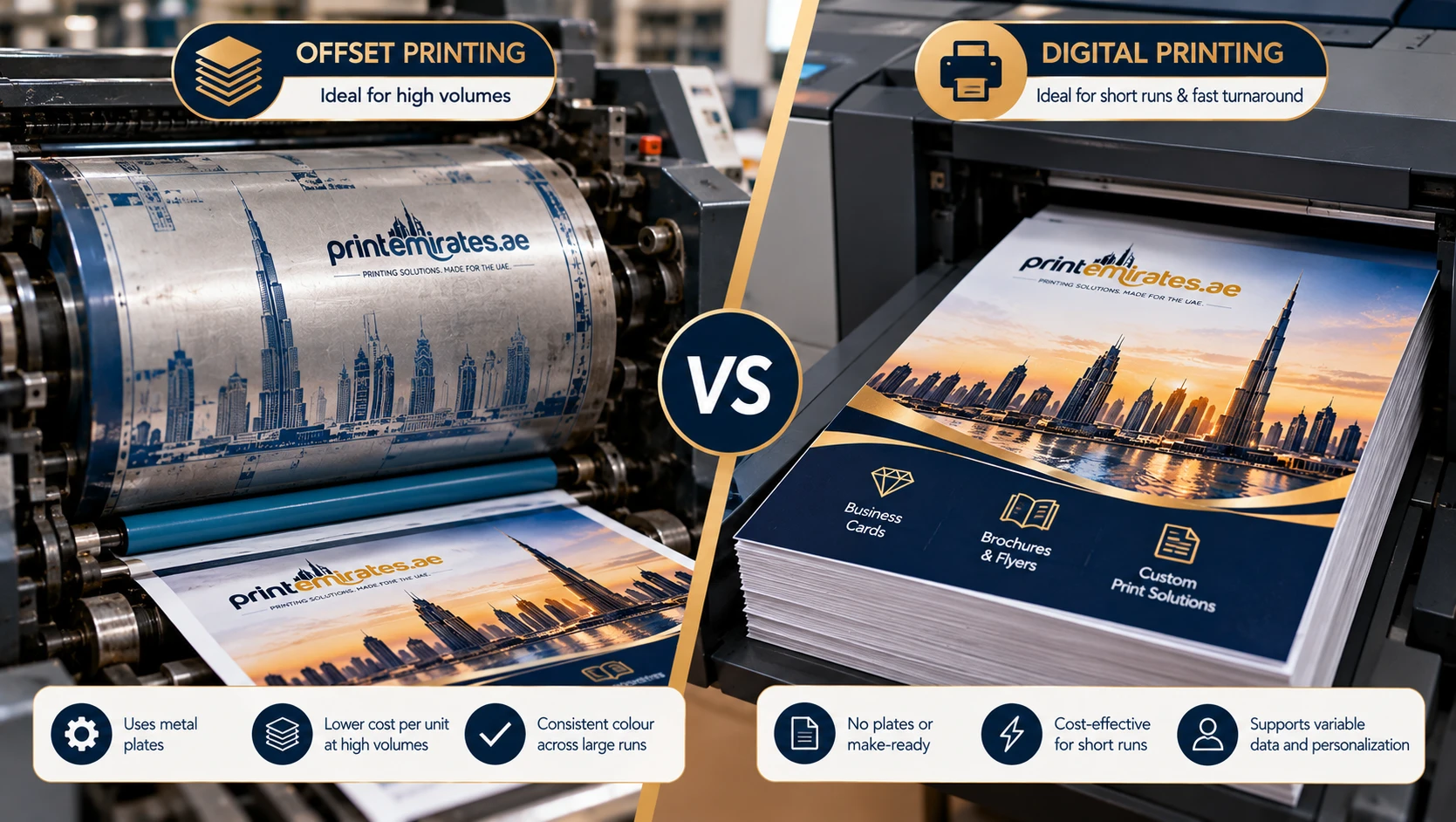
Offset printing transfers ink from a metal plate to a rubber blanket, then onto the paper. Each color needs its own plate. A standard four-color (CMYK) job therefore needs four plates, and every plate has to be imaged, mounted, and registered before the first good sheet comes off the press.
That preparation is called make-ready. It also consumes paper and ink while the operator brings the press up to color. Once the press is running, sheets come off at high speed, and the cost of each additional sheet is very low because it is mostly paper and ink.
Digital printing
Digital presses use toner or inkjet heads driven directly from the print-ready PDF. There are no plates and no make-ready in the offset sense. The first sheet costs roughly the same as the thousandth sheet, which is why digital is described as having a flat unit cost.
Digital presses also handle variable content natively, because there is no physical plate to change.
Set-up versus no set-up: The real difference
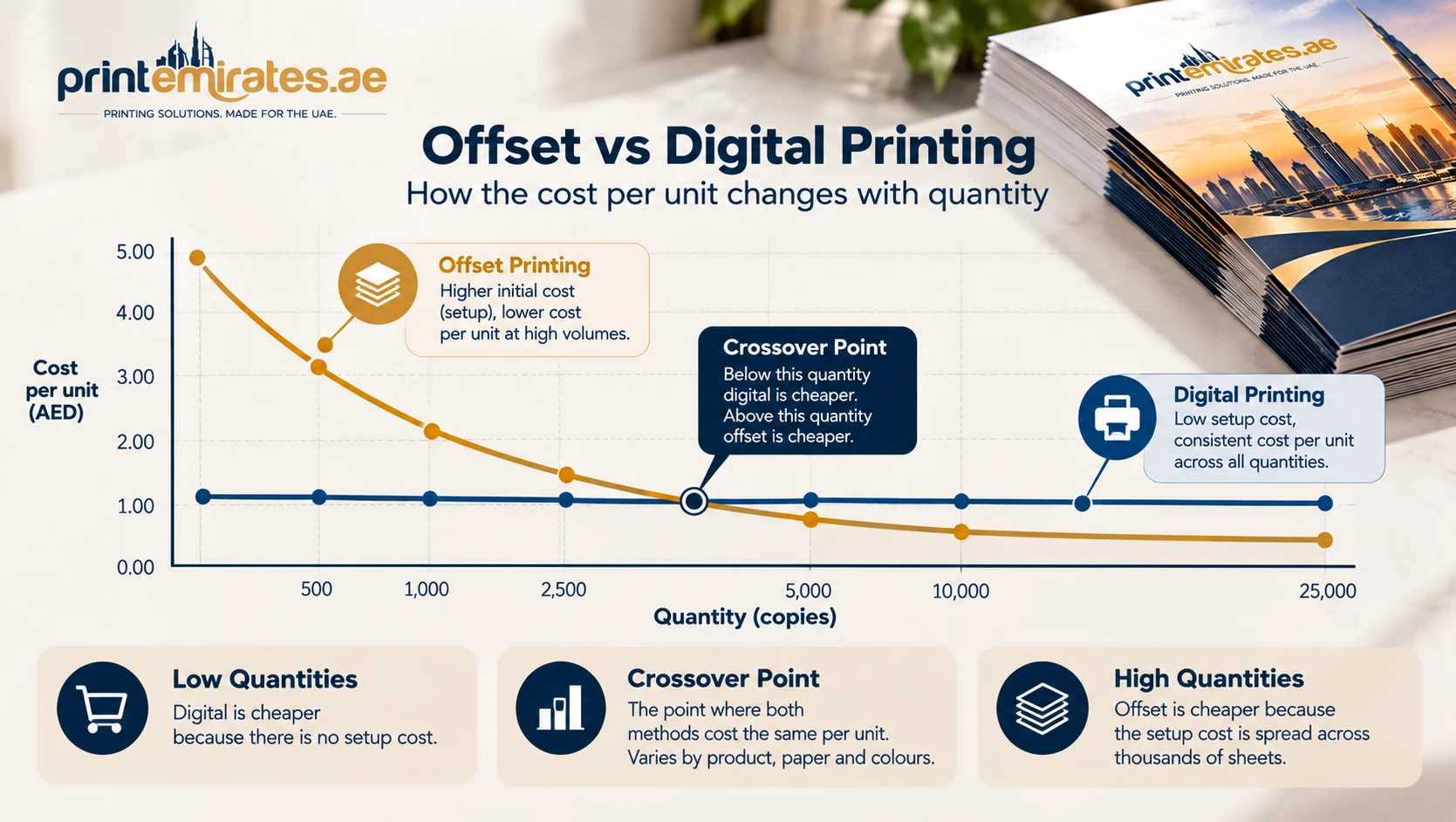
The whole offset vs digital printing decision comes down to one line on the quote: setup. Offset carries a fixed cost that exists whether you print 500 sheets or 50,000. Digital carries almost none, but its per-sheet cost is higher and does not fall much as the run grows.
At low quantities the fixed setup dominates, and digital is cheaper. At high quantities the per-sheet cost dominates, and the offset is cheaper.
The crossover principle: why the cost curves meet
Plot cost per unit against quantity, and you get two lines. The digital line is almost horizontal. The offset line starts high because the setup is divided by a small number and then drops steeply as the quantity grows before flattening out near the raw cost of paper and ink.
Where the two lines cross is the crossover point. Below it, choose digital. Above it, choose offset. The crossover is not a single universal number. It moves depending on:
- Number of colors. More colors mean more plates, so the offset fixed cost rises and the crossover moves to a higher quantity.
- Sheet size and imposition.A small item such as a business card fits many copies on one sheet, so a modest order of cards already represents a large number of impressions per sheet, which favors offset sooner than you might expect.
- Paper stock.Heavy or specialty stocks cost the same whichever press prints them, so they compress the gap between the two methods.
- Finishing.Lamination, folding, and die-cutting are usually priced separately and apply to both methods equally.
For most A5 or A4 flyers and standard brochures, the crossover typically sits somewhere in the low thousands of copies. Treat this as a direction, not a figure, and ask for both methods to be quoted when your order is near the boundary.
Color consistency and Pantone
Color across the run
Offset, once set, holds color very consistently across a long run because the operator has controlled ink density on the press. Digital presses are stable across a single job but can show slight variation between jobs printed on different days or on different machines. If you reprint a brochure digitally six months later, expect a small shift.
For brand-critical color across multiple reprints, offset with a documented ink specification is the safer route. For a one-off event flyer, digital variation is rarely visible to the reader.
Spot color and metallics
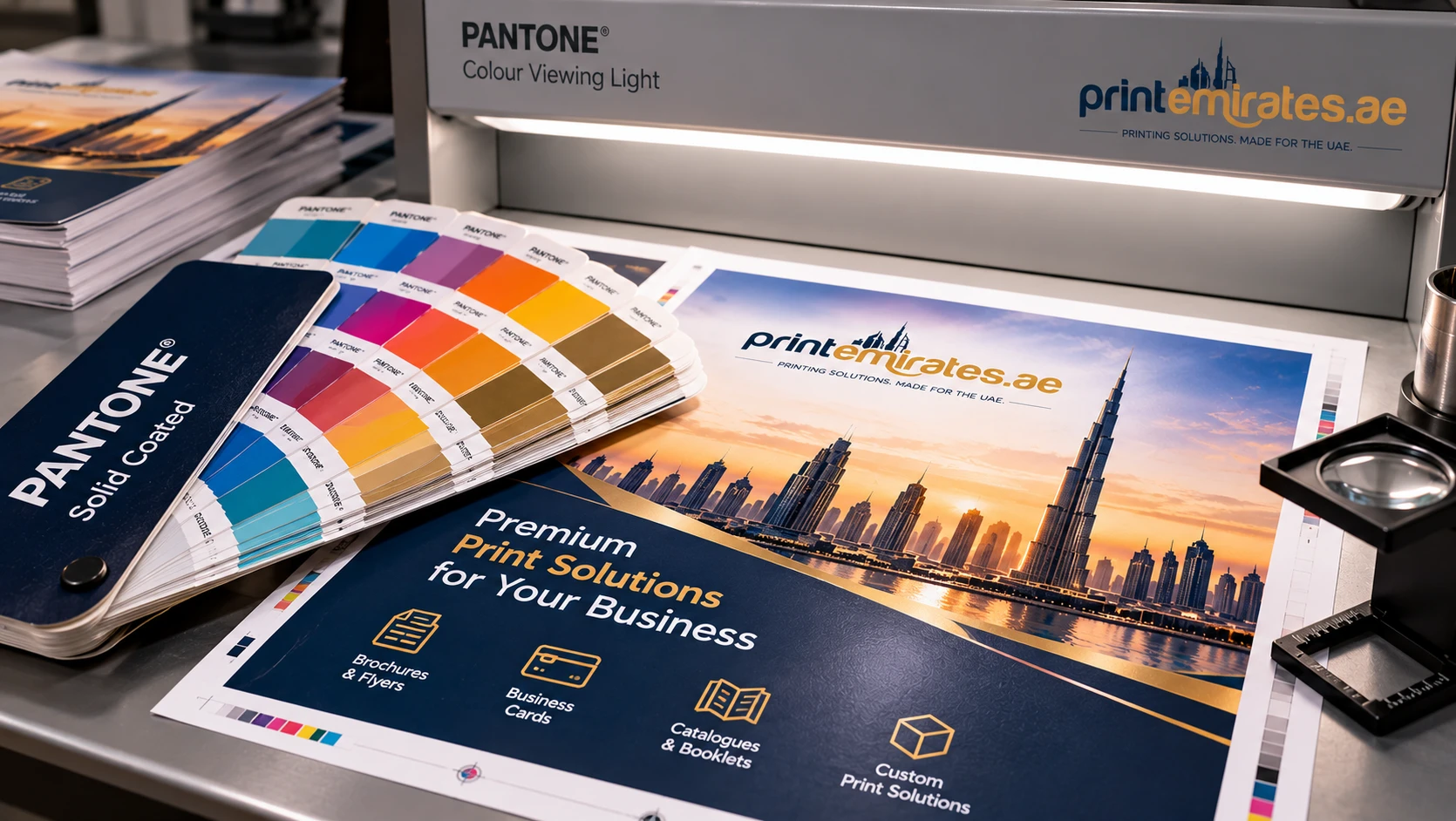
Offset can print true Pantone spot colors by mixing the actual ink. That matters when a brand color sits outside the CMYK gamut, such as strong oranges, deep blues, and most greens. Offset can also print metallic inks and fluorescents, and can add a fifth or sixth plate for a spot color alongside CMYK.
Digital presses simulate Pantone colors using CMYK, sometimes with extra toners for a wider gamut. The result is close on many colors and off on others. If your brand guide specifies a Pantone reference, ask the printer to show you a digital simulation before committing, or specify offset.
Variable data and personalization
Digital is the only practical choice for variable data. Each sheet can differ, which covers:
- Named invitations and delegate badges
- Sequential numbering and unique QR codes on vouchers
- Regional versions of the same flyer with different addresses
- Staffbusiness cardswhere every card carries a different name
Offset cannot do this without a separate plate set per version. A common hybrid is to print the fixed shell offset in bulk and then overprint the variable detail digitally. This works well for letterheads and certificates and can lower the total cost on large personalized runs.
Paper range and finishing
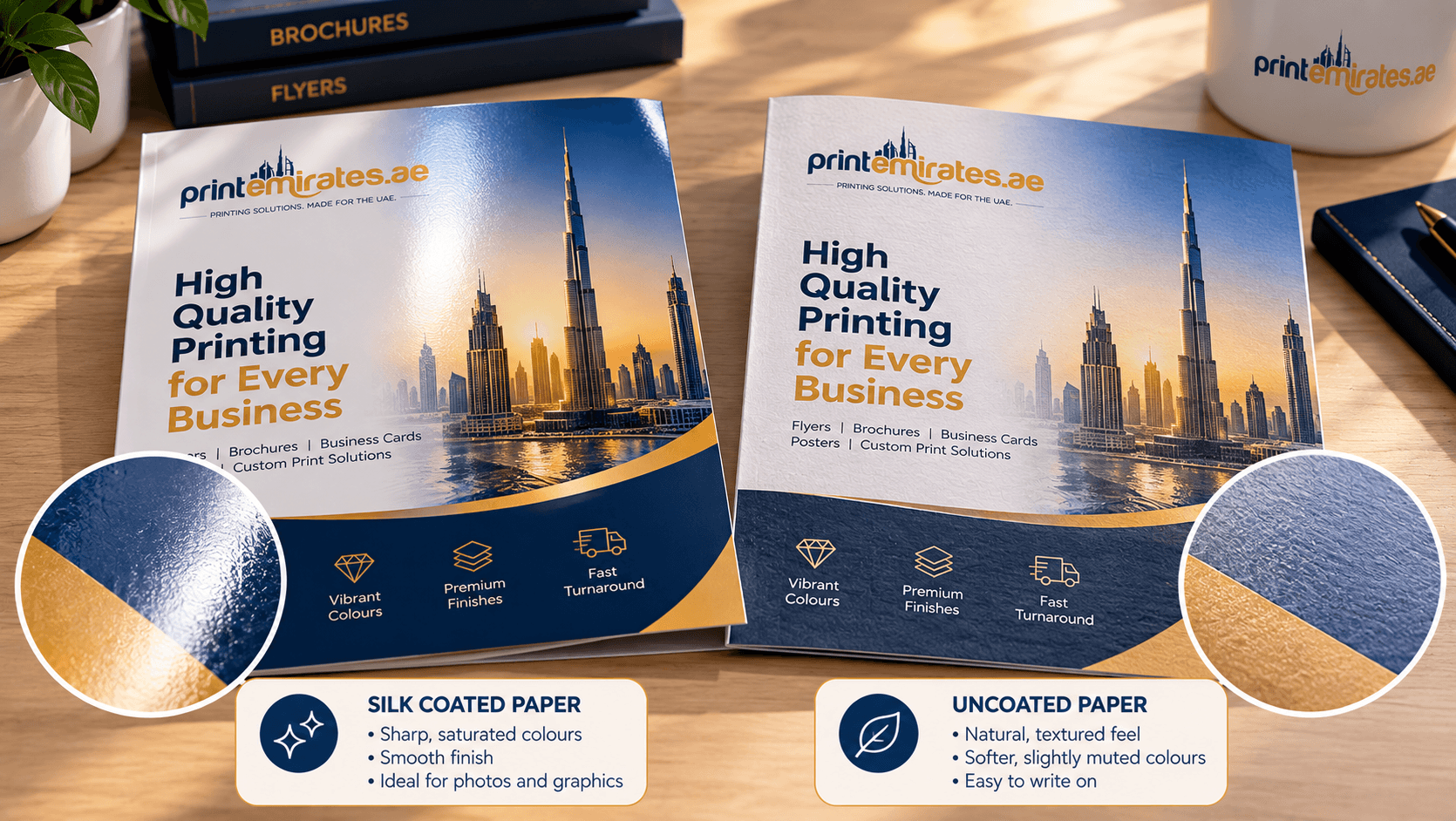
Offset presses accept a very wide range of stocks, from thin 80 gsm bond to 400 gsm board, plus textured, uncoated, and specialty papers. Ink sits on the surface in a thin film, so the texture and color of the stock show through naturally.
Digital presses have a narrower certified range. Most handle 90gsm to 350gsm coated and uncoated stocks comfortably. Very heavy boards, heavily textured sheets, and some synthetics can cause fusing or feeding problems. Toner also sits slightly on top of the paper and can crack on tight folds of heavy stock unless the fold is scored first.
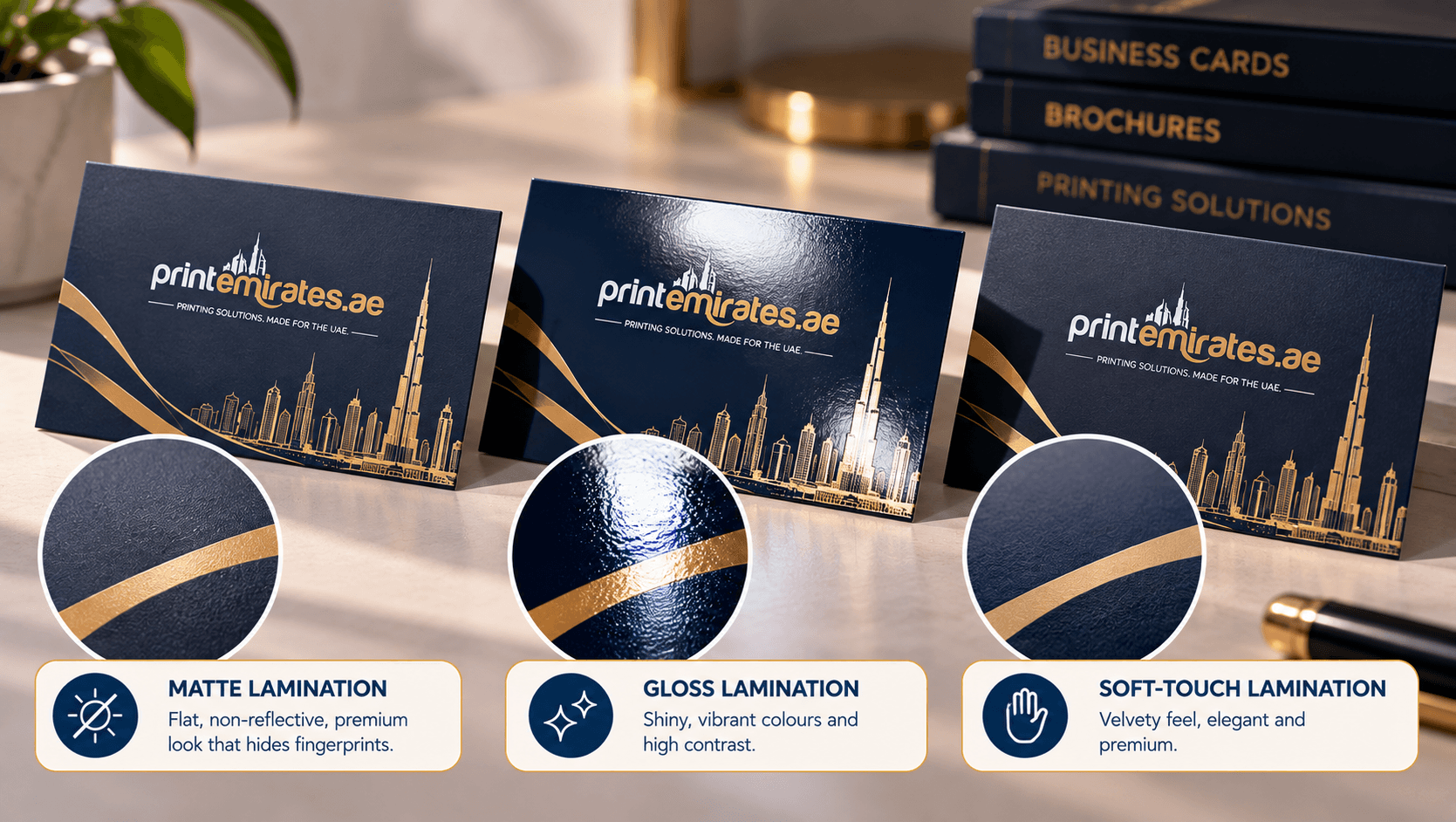
For both methods, lamination and coatings behave similarly, but check the fold. Matt lamination on 350 gsm is standard for foldedbrochuresand hides toner cracking on digital work.
Lead-time logic
Digital has the shorter path from file to finished sheet because it skips plate-making and make-ready. A same-day or next-day digital job is realistic when artwork arrives correct and the finishing is simple. Offset adds the plate and make-ready stage at the start and often a drying stage before finishing, so its schedule is longer even for a perfect file.
If your deadline is tight, digital may be the only option regardless of quantity. Offset rewards planning. Order the annual run of letterheads or the quarter’s flyers in one go and the setup is paid once. Check thedelivery and turnaround pagefor current schedules across Dubai and the other emirates before you fix a launch date.
Decision table by product and run size
Use this table as a starting point when weighing offset vs digital printing in Dubai. The middle column marks the zone where both methods should be quoted.
Product | Short run (digital) | Boundary zone (quote both) | Long run (offset) |
Business cards, one name | Up to a few hundred | Several hundred to about a thousand | Above a thousand |
Business cards, many names | Any quantity (variable data) | Hybrid shell + digital overprint | Not practical |
A5 flyers, 4/4 | Up to about a thousand | Low thousands | Several thousand and above |
A4 tri-fold brochures | Up to several hundred | Around a thousand | Multiple thousands |
Letterheads, 90–120 gsm | Up to a few hundred | Around a thousand | Multiple thousands, or spot-color logo |
Personalized invitations | Any quantity | – | – |
Booklets and catalogues | Fewer than a few hundred | Several hundred | Thousands, or Pantone brand color |
Stickers and labels | Short runs and many versions | Mid volumes | Very largesingle-version runs |
Heavy stock, extra colors, and complex finishing all shift the crossover higher, which extends the digital zone.
Preparing artwork for either method
Both methods need the same core file: a print-ready PDF at 300 dpi, CMYK, 3 mm bleed, and embedded or outlined fonts. Offset adds two extra requirements. Spot colors must be defined as named Pantone swatches, not as CMYK approximations, and rich black should be built as a mix rather than 100% K to avoid a washed-out look on large solid areas.
For digital, avoid very large flat tints of a single light color, which can show banding. Theartwork guidecovers bleed, safe zones, and color settings for every product on the site.
 A simple decision routine
- Count the copies you need in the next three months, not the next week. Batching moves you toward offset.
- Check the brand guide for Pantone or metallic colors. If they are essential, offset is the safer route.
- Check for variable content. If every copy differs, digital or a hybrid is the answer.
- Check the deadline. If it is within a couple of days, digital is the realistic route.
Frequently asked questions
Is offset printing always cheaper for large orders?
Usually, but not automatically. Heavy specialty stock, many color variations, and complex finishing raise the offset fixed cost and push the crossover point to a higher quantity. Always compare quotes for both methods when the order sits in the low thousands.
Can I mix offset and digital in one job?
Yes. The common approach is to print the fixed design offset in bulk and overprint variable details digitally afterwards. This suits letterheads, certificates, and vouchers with sequential numbering.
Will digital printing match my Pantone brand color?
Digital presses simulate Pantone colors with CMYK or extended toner sets. Many colors match closely; some do not. Ask for a printed digital proof against your swatch before ordering, or choose offset with a true spot ink if the color is critical.
Does the paper choice change the decision?
It can. Digital presses have a narrower certified stock range, so very heavy boards or textured papers may only be available offset. Standard 130gsm to 350gsm coated stocks run well on both.
Which method has the shorter turnaround?
Digital is faster from file to finished sheet because it skips plate-making and make-ready. Offset needs more scheduling time, so it suits planned runs rather than urgent jobs.
Ready to order?
Send your quantity, product and deadline and the team will advise whether offset or digital gives the better result and price for your job. Browse the fullbusiness printing range, includingflyersand brochures, or go straight to thecontact pageto message on WhatsApp or use Get a Quote with your print-ready PDF attached.